OCEANS-X is the Maritime and Port Authority of Singapore’s new API and data exchange platform, launched at Singapore Maritime Week in April 2026. It connects maritime companies, regulators, port operators, and international partners for system-to-system data exchange — starting with digital port clearance and expanding to cover compliance reporting, shipping operations, and AI-enabled maritime services. The platform launched with over 100 APIs and datasets live from day one.
For ship management companies, OCEANS-X is not an emergency. But it is the infrastructure that will define which operators move data efficiently in Singapore’s port ecosystem over the next 3–5 years. The question isn’t whether to connect — it’s when, and what connecting actually requires from your existing systems.
What OCEANS-X Actually Is — and What It Isn’t
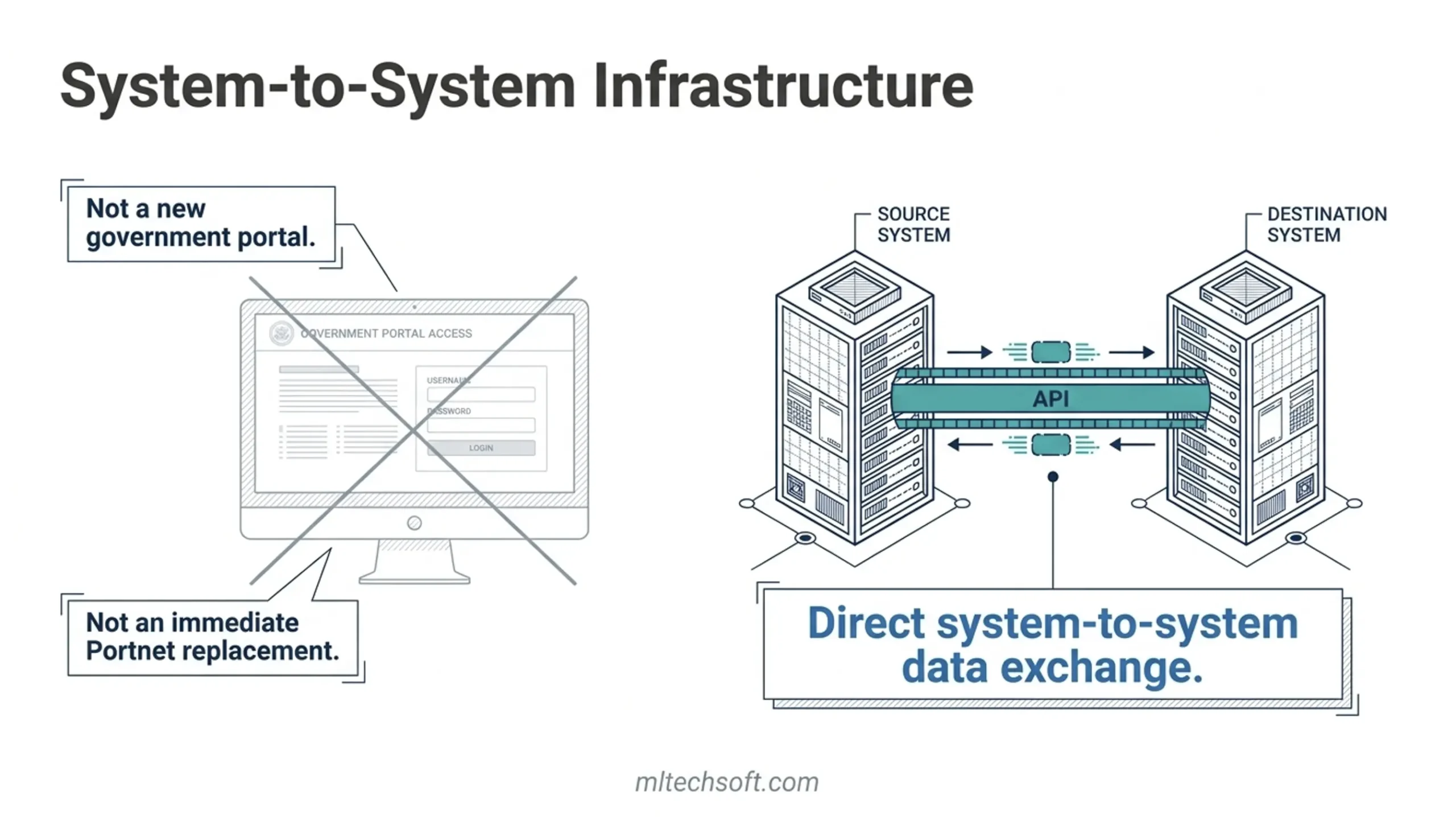
Strip away the press release language and OCEANS-X does one thing: it lets maritime companies exchange data with MPA, other port operators, shipping lines, and international partners directly, system-to-system, without manual portal entry or file attachments.
Before OCEANS-X, a ship management company handling port clearance for an arriving vessel submitted data through Portnet — a portal-based process that required manual input by operations staff. With OCEANS-X, a company whose fleet management system has API connectivity can transmit that data automatically, directly to MPA, without a human touching a form.
That’s the core function. What it isn’t:
OCEANS-X is not a new government portal you register with. It’s infrastructure — the same way you don’t “use” the internet by going to a website called “the internet.” It is not an immediate replacement for Portnet. Portnet continues operating; OCEANS-X is the connectivity layer being built above it. It does not require your operations team to do anything this week. The integration work happens at the software system level, not in your daily workflow.
The platform currently hosts over 100 APIs covering port clearance, compliance data exchange, vessel scheduling, and MPA regulatory submissions. The Singapore Shipping Association and MPA have a joint initiative to extend OCEANS-X into ship management, chartering, and bunkering operations — which means the platform’s scope will expand significantly over the next 12–18 months.
What this means for you: OCEANS-X is infrastructure, and infrastructure rewards early connectivity. The companies that connected to Portnet early didn’t gain a permanent advantage — but they also didn’t spend two years explaining to clients why their data turnaround was slower.
What It Means Specifically for Ship Management Companies
Three areas where OCEANS-X will be felt in ship management operations over the coming 12–24 months.
Port clearance. Digital port clearance is the first live OCEANS-X service. A ship management company whose fleet management system has REST API capability can connect directly to MPA’s clearance endpoint, automating the data submission that currently requires manual Portnet entry. Companies still on manual processes take longer, require more operations staff time, and create a paper trail that a class society auditor increasingly views as a data management indicator.
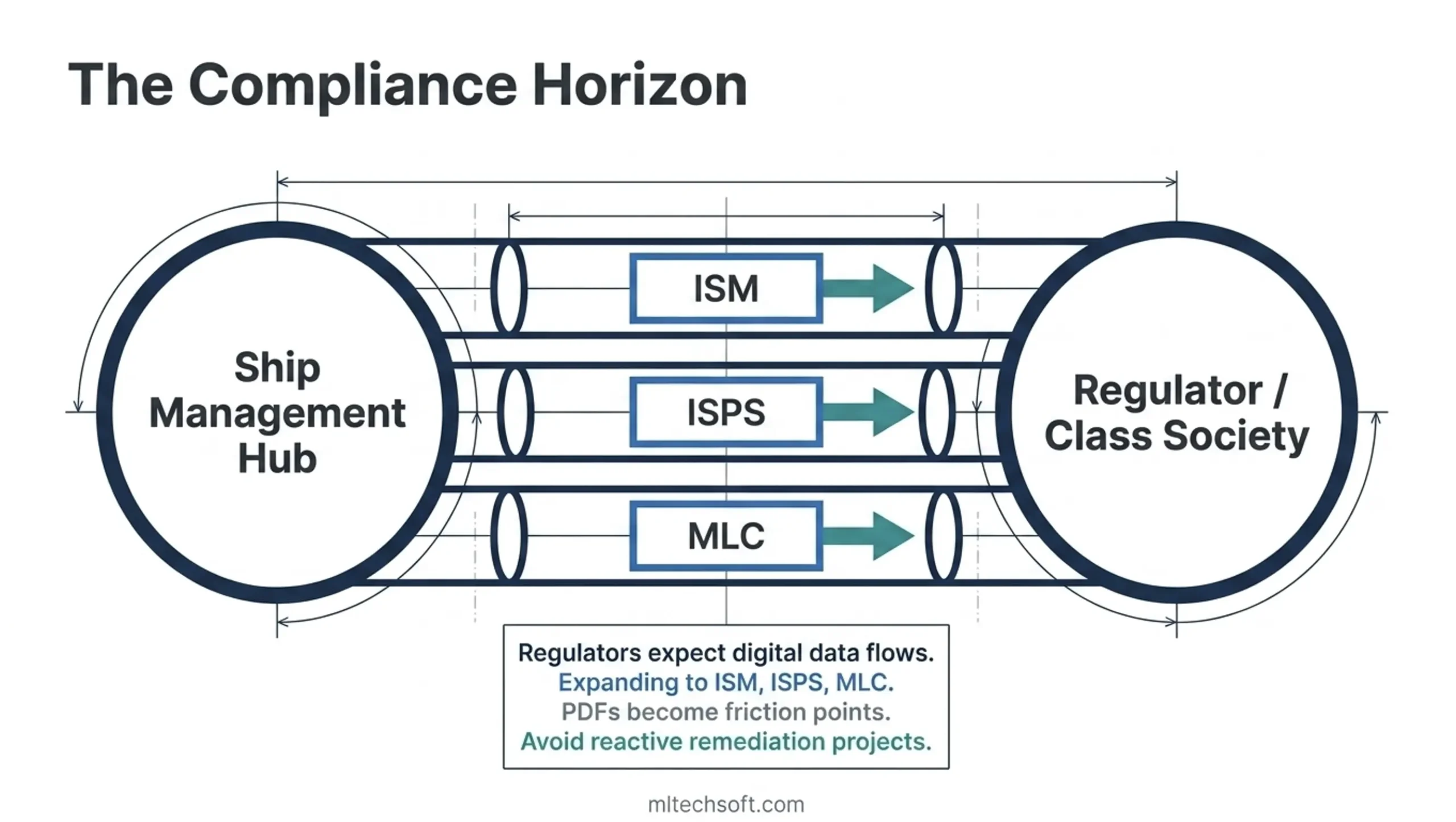
Compliance data exchange. OCEANS-X is designed to eventually carry ISM, ISPS, and MLC compliance data between ship managers, class societies, and flag state administrations. This doesn’t exist fully today — but the architecture is being built now. Ship managers whose systems are API-ready will be first in line when these data flows become standard practice. Those on legacy systems will face a remediation project under time pressure rather than a planned integration.
The vendor ecosystem shift. OCEANS-X creates a connectivity standard that third-party maritime software vendors will build to. Once a critical mass of vendors have OCEANS-X connectors, ship managers on those platforms gain the connections automatically through product updates. Ship managers on non-connected platforms wait — or pay for custom integrations that maintain a system the vendor has deprioritised.
Here’s what this last point means in practice: a ship management company running a modern fleet management platform with an active development roadmap will likely receive OCEANS-X connectivity through a standard software update within 12–18 months. A company running a legacy system whose vendor is in maintenance-only mode has a different problem. The OCEANS-X question surfaces it.
What this means for you: The most important OCEANS-X question isn’t “should we connect?” — it’s “is our current vendor on a roadmap that leads there, and on what timeline?”
Your 90-Day OCEANS-X Readiness Plan
Not a migration project. A readiness assessment. Five specific steps.
Step 1 (Week 1–2): Ask your primary fleet management software vendor about their OCEANS-X integration roadmap. If they know what OCEANS-X is, have a timeline, and can name the specific API endpoints they’re building to — you’re in good shape. If they don’t have a roadmap but are aware of the platform, you have 6–12 months before this matters. If they’ve never heard of OCEANS-X, that answer tells you something important about their orientation toward Singapore’s regulatory ecosystem.
Step 2 (Week 2–3): Confirm whether your current system has existing API capability. Specifically: does your fleet management system support REST API calls or webhook connectivity? This doesn’t require a technical audit — your vendor’s technical team can answer it in a 15-minute call. The answer determines whether OCEANS-X connectivity is a configuration exercise (modern system with unused API capability) or a development project (legacy system with no API layer).
Step 3 (Week 3–4): Register your organisation on the OCEANS-X platform. MPA’s OCEANS-X onboarding for maritime companies is low-friction and does not commit you to any integration timeline. Registering establishes your organisation’s profile, gives your IT team access to the API documentation, and places you on MPA’s communication list for platform updates. This is a 30-minute administrative task. There’s no reason not to do it this month.
Step 4 (Week 4–6): Identify the one workflow that would most benefit from automated data exchange. For most ship management companies, digital port clearance is the obvious first candidate — it’s live, it’s high-frequency, and the staff time saving is immediate. Map out what that workflow currently looks like and what an automated version would require from your systems. This document becomes the foundation for any integration scoping conversation with your vendor.
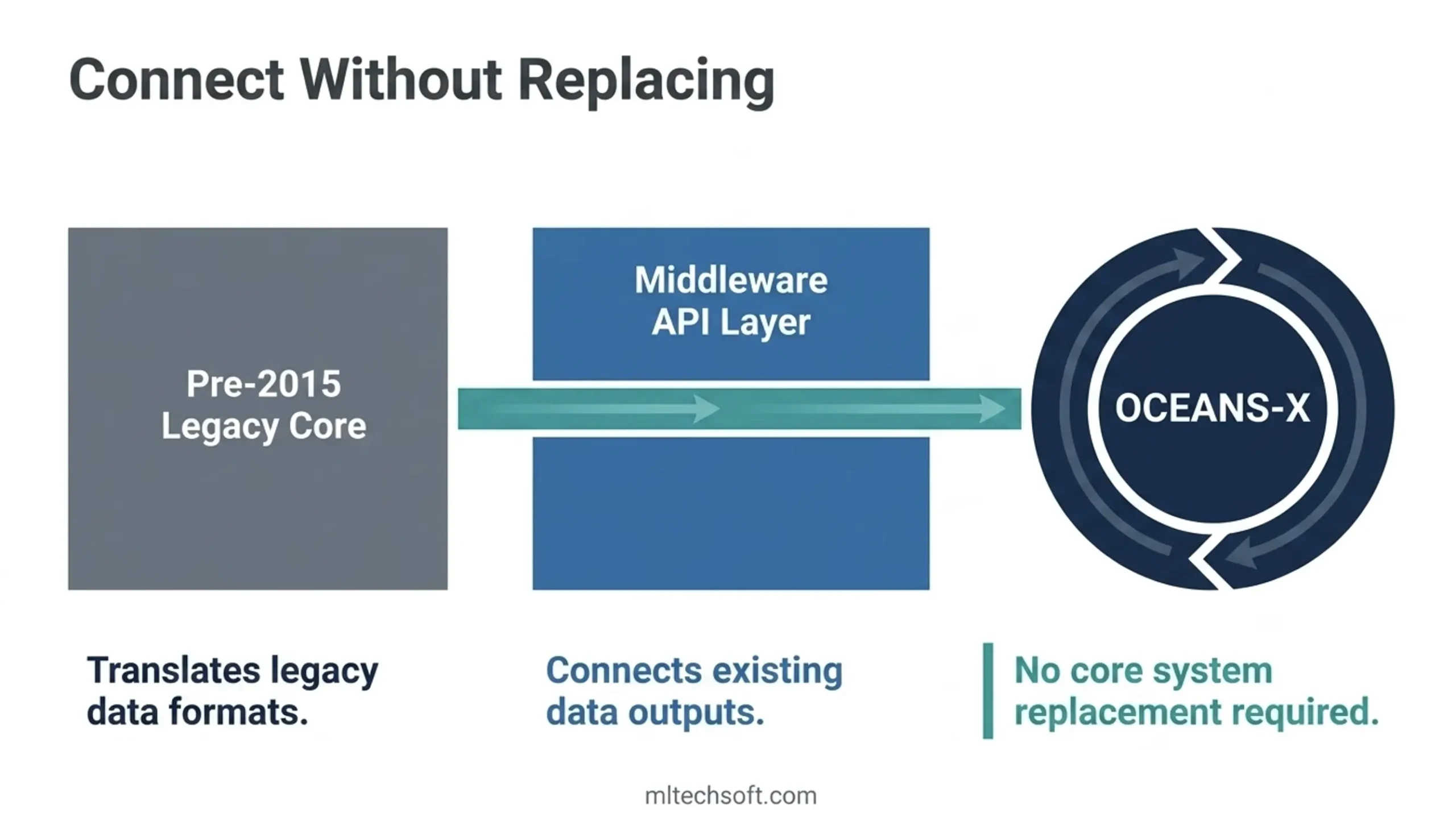
Step 5 (Week 6–12): If your vendor can’t provide a clear integration timeline, begin scoping alternatives. That might mean a middleware integration (connecting your existing system to OCEANS-X via an API layer without replacing the core system), a phased system upgrade, or an assessment of whether the broader modernisation conversation you’ve been deferring is now the more efficient path. In our work assessing ship management systems for Singapore operators, the most common API readiness gap we find is in systems built before 2015 — these typically lack the connectivity architecture OCEANS-X requires without middleware development. That development is usually less expensive than operators expect.
What this means for you: Five steps, 90 days, no major commitments required. The output is a clear answer to the question your CEO is already asking.
4 Questions to Ask Your Software Vendor Before the End of the Month
These four questions separate vendors who are tracking Singapore’s regulatory environment from those who aren’t.
1. “Do you have an OCEANS-X integration in your current product roadmap, and what’s the specific timeline?” A strong answer names a timeline and references the specific OCEANS-X services they’re building to (port clearance API, compliance data exchange, etc.). A weak answer is “we’re monitoring the situation.” A vendor who has never heard of OCEANS-X is behind in a way that should factor into your next contract renewal conversation.
2. “Does our current system support REST API or webhook connectivity today?” This is a technical yes/no. If the answer is yes, OCEANS-X connectivity is likely a configuration and testing exercise. If the answer is no, you’re looking at development work regardless of which vendor does it.
3. “Have you tested data exchange with MPA’s OCEANS-X sandbox environment?” Vendors actively building OCEANS-X integration will be using MPA’s sandbox. Vendors who haven’t accessed the sandbox yet don’t have a working integration — they have a plan. The distinction matters if your timeline is 6 months versus 18 months.
4. “If OCEANS-X integration isn’t in your standard product, what would a custom integration cost and who would own it long-term?” Custom integrations built to connect a legacy system to a new platform tend to become liabilities themselves — they require maintenance, they’re not covered by standard vendor support, and they can break when either the platform or the core system updates. If the answer to question 3 is “no” and the answer to question 4 is a significant custom development figure with unclear long-term ownership, that’s relevant data for the broader modernisation conversation.
What this means for you: A vendor who answers questions 1, 2, and 3 confidently is a vendor who is paying attention. A vendor who struggles with all four is a risk factor in a changing connectivity environment.
What Happens If You Do Nothing for Now
Honestly? Nothing happens this week. OCEANS-X is opt-in infrastructure today. MPA has not mandated integration timelines for ship management companies, and the platform is in active development.
But three scenarios will make “doing nothing” a problem — and they tend to arrive without much warning.
The port clearance efficiency gap. As more shipping companies connect their in-house systems for automated clearance, manually submitted clearances may face longer processing queues. MPA’s stated goal is to reduce manual intervention in port processes — which means the manual path becomes the slower path over time, not immediately. A ship management company still submitting manually in 2028 is a company asking its operations team to do work a connected competitor’s system does automatically.
A client or partner asks about it. Shipping lines, cargo owners, and class societies are beginning to ask software-related questions in tender processes and operational reviews. “Is your ship management system OCEANS-X compatible?” is a question that will appear in RFPs within 12 months. An unprepared answer is a competitive disadvantage.
A class society or regulatory review surfaces it. OCEANS-X’s compliance data exchange capabilities are being built for a reason — regulators want digital data flows, not PDF attachments. As these services go live, auditors will increasingly expect to see that ship managers have the connectivity to participate. A legacy system that can’t connect isn’t immediately non-compliant. But it’s a friction point that only gets more expensive to resolve as time passes.
What this means for you: The honest answer is that you have a window — probably 12–18 months — before non-connectivity creates meaningful operational friction. Use it for a planned assessment, not a reactive one.
FAQ: OCEANS-X Questions from Ship Management IT Teams
Is OCEANS-X mandatory for Singapore ship management companies?
No mandatory integration deadline has been announced as of May 2026. OCEANS-X is opt-in infrastructure — MPA is building the platform and creating incentives for adoption rather than mandating compliance timelines. That said, individual services (such as digital port clearance) may have their own adoption timelines as MPA progressively phases down manual submission processes. Staying current with MPA communications about specific service mandates is recommended.
How long does an OCEANS-X integration typically take?
For a modern fleet management system with existing API capability, connecting to a specific OCEANS-X endpoint (such as digital port clearance) can be done in 2–6 weeks once the vendor has completed their integration work. For a legacy system requiring middleware development, the realistic timeline is 3–6 months from scoping to production. The variation in estimates from different vendors is often a function of whether they’ve actually started the work or are estimating from scratch.
Can a legacy ship management system connect to OCEANS-X without replacing it?
In many cases, yes. A middleware API layer can connect a legacy system’s existing data outputs to OCEANS-X endpoints without replacing the core system. MLTech Soft has done this type of integration work for maritime operators in Singapore — the output is a connection layer that translates legacy data formats into the API standards OCEANS-X expects. It’s not the same as a fully modern system, and it creates its own maintenance considerations, but for companies not ready for a full migration it can close the connectivity gap in the near term. The right answer depends on your system’s specific architecture and how long you intend to stay on it.
If your ship management software vendor hasn’t given you a clear OCEANS-X integration roadmap, MLTech Soft can assess your systems’ API readiness and outline what connectivity would take — in a free 1-hour consultation. Our Singapore team has direct familiarity with MPA’s digital services environment. [Book a free assessment at mltechsoft.com.]